


Flexible & Specialized Packaging
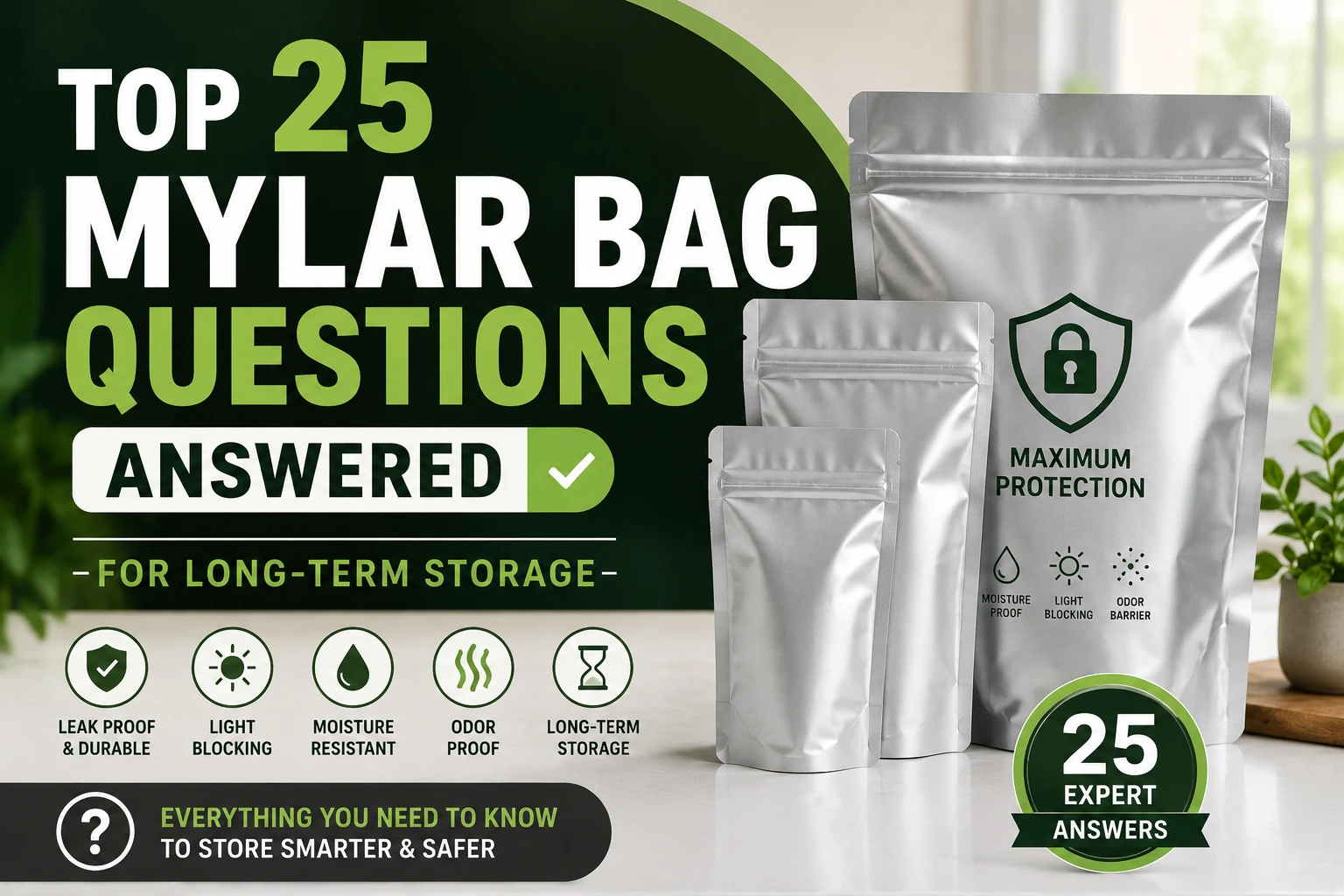
Top 25 Mylar Bag Questions Answered for Long-Term Storage
In the realms of long-term food preservation, emergency preparedness, and commercial retail distribution, mylar bags stand as an essential benchmark. Manufactured using Biaxially Oriented Polyethylene Terephthalate (BoPET) film, this flexible packaging provides a high-performance multi-layered shield that protects sensitive commodities from the natural catalysts of spoilage: oxygen exposure, humidity, and light transmission.
For modern brands looking to expand their retail presence, your choices in protective packaging function as a silent ambassador on store shelves. Upgrading your inventory management by deciding to explore our custom packaging solutions helps bridge the gap between high-strength structural security and vibrant visual branding.
Whether you are setting up an emergency domestic food pantry or launching a commercial product line, relying on assumptions can lead to costly inventory losses. To provide complete operational clarity, we have addressed the top 25 most critical questions regarding mylar bags, foil pouches, and barrier packaging systems.
Quick Jump
Section 01Food Safety
Are Mylar Bags Safe for Food Storage?
01Are Mylar Bags Harmful for Food Content?
Not at all. High-quality, industrial barrier bags are manufactured using food-contact-safe materials that comply with applicable food packaging regulations. Authentic mylar films engineered specifically for consumables are completely non-toxic and structurally inert.
Unlike standard grocery-grade plastics that can slowly release harmful chemical compounds over time—especially when stored in variable temperatures like garages or outdoor sheds—mylar’s tightly cross-linked composition eliminates chemical migration. This preserves the original taste, aroma, and full nutritional profile of your stored goods across extended periods.
02How Can You Pack Food in Mylar Bags?
Preserving dry goods in metallized pouches is a simple, methodical process that achieves excellent shelf-life metrics when executed cleanly:
- Ensure Dryness: Confirm your food products have an internal moisture level below 10%.
- Bag Allocation: Fill the barrier bag while keeping roughly 2 to 3 inches of clear space near the collar for a proper heat seal.
- Incorporate Oxygen Absorbers: Drop a correctly rated oxygen scavenger directly on top of the food matrix.
- Displace Trapped Gas: Manually compress the body of the pouch to work excess ambient air out through the top.
- Apply Heat: Run an appropriate thermal sealer along the open margin to form a continuous, solid weld.
- Storage Placement: Label your pouches and transfer them into a stable, temperature-controlled environment.
03What is the Right Way to Use Mylar Bags?
The proper deployment of mylar packaging means treating it as one component of a holistic storage system rather than a standalone fix. The ideal workflow requires verifying that you are packing strictly low-moisture dry products, matching the internal volume with an appropriate oxygen scavenger, sealing with sufficient heat, and keeping the sealed packs safe from external physical damage.
⚠ SAFETY GUIDELINE
While metallized bags provide an incredible barrier against gases and ambient humidity, they are not completely proof against rodents. Mice and rats can easily gnaw through flexible laminates if they are drawn by the scent of food. The safest practice is to place your sealed foil pouches inside a rigid, heavy-duty plastic bucket or tote for physical defense.
04Can We Reuse Mylar Bags?
Mylar bags can be reused if they remain undamaged and are thoroughly cleaned after use. If a pouch was originally sealed using heat, you can carefully trim away the existing weld line, wash the interior space with warm soapy water, and verify that it is completely dry before introducing fresh contents. The bag will naturally lose a small amount of usable height with each cycle.
While this manual recycling works well for home pantries, retail operations must maintain strict cross-contamination protocols. For commercial purposes, selecting brand-new, factory-sealed options like our range of printed pouches ensures total compliance, sterile product delivery, and factory-level security.
05Do Mylar Bags Leak Smell?
Authentic metallized bags are highly effective at blocking odors. This robust odor barrier comes from the layer of core aluminum foil that is permanently laminated between the protective plastic plies. Because aluminum possesses an incredibly low gas transmission rate, volatile organic compounds and pungent aromas cannot pass through the film.
This structural property makes these pouches highly popular in the premium coffee, botanical, and organic spice trades, where keeping intense aromas locked inside while protecting items from catching exterior musty smells is critical.

Section 02Sealing Methods
How to Seal Mylar Bags Correctly
06What are the Ways to Seal Mylar Pouches?
Creating an airtight weld across a barrier bag requires the right mix of heat, uniform pressure, and contact time. Depending on your current packaging scale and workspace setup, several methods can be utilized:
| Sealing Tool | Best Suited For | Approximate Setting | Core Advantage | Core Limitation |
|---|---|---|---|---|
| Impulse Heat Sealer | Commercial small businesses & heavy preppers | 375°F - 420°F electrical pulse | Produces flat, clean, highly secure welds very quickly | Requires a designated workstation and constant power |
| Household Clothes Iron | Small domestic batches & homesteaders | High Cotton/Linen setting + wood backing strip | Zero extra tool costs; highly accessible | Prone to manual errors and wrinkles over large volumes |
| Flat Hair Iron | Small stand-up pouches & on-the-spot seals | 380°F - 400°F dual-plate compression | Excellent mobility; allows upright sealing easily | Tedious and slow for wide 5-gallon food storage bags |
| Chamber Vacuum System | Commercial processing facilities | Automated mechanical cycle | Extracts gas and seals the margin in a single automated step | Standard residential snorkel sealers cannot grip smooth mylar |
While a quality heat seal preserves the interior environment, handling external transit stresses during distribution is a separate challenge. Incorporating your protective barrier pouches into durable, custom-sized food packaging bags or outer shippers helps keep your inventory protected from vibrations and scratching along delivery routes.
07What Items Shouldn’t Be Stored in Mylar Bags?
Even with its impressive performance, flexible foil packaging is not suited for preserving all types of food. Certain goods should never be placed into an oxygen-free, long-term mylar storage setup:
- Moisture-Rich Whole Foods: Fresh meats, soft dairy products, wet vegetables, and un-dehydrated fruits.
- High-Fat / Oil-Heavy Staples: Whole nuts, brown rice, standard cooking oils, and greasy potato chips.
This restriction is based on biological safety and chemical stability. Sealing items with a moisture level higher than 10% inside an oxygen-depleted environment creates ideal conditions for Clostridium botulinum to multiply, creating risks of food poisoning.
⚠ SAFETY NOTICE
Storage recommendations are provided for informational purposes only. Always follow official USDA and FDA food safety guidelines to avoid contamination.
08Can We Freeze a Mylar Bag After Storing Content in It?
Yes, mylar bags can safely be placed in a freezer for long-term storage applications. The multi-layered composite materials are designed to handle cold storage temperatures effectively without turning brittle, cracking, or losing their laminate bonding layers.
In fact, keeping your newly sealed grain pouches in a deep freeze for a few days is an excellent, non-chemical way to eliminate potential insect larvae or eggs that may naturally exist in bulk whole grains before they have a chance to hatch.
09Is it Necessary to Remove Air from Mylar Bags?
While squeezing out extra air helps optimize physical storage space, creating a perfect laboratory vacuum is not strictly necessary. Earth’s atmosphere is composed of roughly 78% Nitrogen and 21% Oxygen. Because nitrogen is an inert gas, it does not cause food spoilage; oxygen alone drives rancidity, mold, and stale flavor profiles.
When you use an active oxygen absorber, it chemically targets and neutralizes that harmful 21% oxygen content. The remaining nitrogen stays behind safely, which means a bag can look slightly flexible or puffy while its internal contents remain perfectly preserved.
10Which Printing Methods are Used for Mylar Bags Packaging?
Modern printing technologies allow custom flexible packaging to display highly intricate brand artwork. The chosen method depends heavily on the size of your production run:
- High-Definition Digital Printing: Best for micro-batches, seasonal product variations, and startups. This method requires zero plate costs and produces rich CMYK imagery.
- Rotogravure & Flexographic Presses: The benchmark for large-scale commercial orders. It offers the lowest per-unit printing cost and exceptional color consistency for major rollouts.
From agile digital setups for small e-commerce shops to high-speed commercial presses, clear branding is essential. Transitioning to custom-tailored stand-up pouch packaging gives your business access to durable, eye-catching structural designs utilizing scratch-resistant inks that won’t fade or flake.
Section 03Oxygen Control
Oxygen Absorbers Explained
11What is the Role of Oxygen Absorbers in Mylar Bags?
Oxygen absorbers (OAs) don’t work via mechanical suction; they rely on a simple chemical reaction. Filled primarily with fine iron powder, these packets allow trapped oxygen to oxidize the iron, creating iron oxide (rust). This process effectively traps the oxygen molecules, dropping the interior oxygen concentration to 0.01% or less.
To secure a complete preservation environment, you must correctly scale the absorber rating (measured in cubic centimeters, or cc) to the overall size of your bag: 100cc to 300cc works well for small 1-quart bags, 300cc to 500cc is standard for 1-gallon configurations, and 2000cc is required for large 5-gallon bulk storage sacks.
12What Can Be the Reason Behind Mylar Bags Not Being Suctioned?
This is a highly common troubleshooting issue reported by users. If your bag remains flexible or puffy after 48 hours, it does not mean your setup has failed. Remember, oxygen absorbers only remove the 21% oxygen in the air, leaving the 78% nitrogen behind. If your food item has a lot of empty space between pieces (like elbow macaroni), there will be plenty of nitrogen left over, keeping the bag from collapsing completely.
However, if the food is fine-grained (like flour) and the bag remains completely loose, your absorber may have been exposed to the air for too long before sealing, causing it to lose its potency.
13Are Mylar Bags Good for Cereal Packaging?
Yes, they are an exceptional choice. Metallized films completely halt moisture exchange, meaning your favorite breakfast grains maintain their original crisp crunch for extended periods. However, high-oil cereals generally have a shorter shelf life than low-fat cereals, even when stored in Mylar bags. Keep this in mind when prepping gourmet varieties containing added tree nuts.
14Can We Utilize a Punctured Mylar Bag?
Absolutely not. A food storage pouch with even a microscopic pinhole is completely compromised. Ambient oxygen and humidity will continuously leak back into the environment, quickly exhausting your oxygen absorbers and exposing your items to rapid spoilage. If you spot a puncture or a weak crease seal, transfer the contents into a fresh bag immediately.
15To What Extent Do Mylar Bags Block Light?
The light-blocking capabilities of these films depend entirely on the thickness and inclusion of a true foil layer. Standard 5.0 to 7.0 mil foil-laminated barrier pouches provide an absolute block against visible light, UV rays, and infrared radiation. This total protection prevents light-induced breakdown, preserving organic colors and delicate vitamin complexes.
Today's consumers place a premium on clean aesthetics and recognizable branding. Choosing custom branded solutions like our custom printed mylar bags positions your brand as a professional market leader while preserving the inner product flawlessly.
Section 04Shelf Life
Food Shelf Life in Mylar Bags

16How Long Do Mylar Bags Last When Properly Sealed?
When sealed correctly with a properly rated oxygen absorber and kept in a cool, dark, dry environment, mylar-stored staples like white rice, wheat, and dried beans can comfortably remain shelf-stable for 20 to 30 years. Higher-fat grains and rolled oats sit on the shorter end of that range, while low-moisture staples like rice and wheat sit on the longer end.
The bag itself is rarely the limiting factor—the food's own fat content and the storage environment do far more to determine how long your supplies will actually stay edible.
17Does Storage Temperature Affect Shelf Life?
Significantly, yes. Heat acceleration is the single biggest threat to long-term mylar storage. Every increase in ambient temperature speeds up the chemical breakdown of fats and nutrients inside sealed food. As a general rule:
- Below 60°F: Maximizes shelf life, often pushing toward the upper end of expected ranges.
- 60°F–75°F: A safe, standard range for most home pantries and basements.
- Above 80°F: Can cut expected shelf life significantly, especially in uninsulated garages, sheds, or attics.
Choosing a stable indoor storage spot is one of the simplest, free upgrades you can make to protect your investment.
18Do Sugar and Salt Need Oxygen Absorbers?
No. Sugar and salt are naturally self-stable because of their extremely low moisture content, which makes them inhospitable to the bacteria, mold, and insects that typically spoil food. When sealed in mylar without an absorber, both can remain usable for an effectively indefinite period, making them some of the easiest items to prep.
19Does the Mylar Bag Itself Expire?
The BoPET film and aluminum foil laminate that make up the bag do not have a meaningful expiration date on their own and remain structurally stable for decades when undamaged. Shelf-life estimates you see for mylar storage are really describing the food inside, not the packaging material itself—assuming the seal stays intact and the bag avoids punctures.
20How Can You Tell If Stored Food Has Gone Bad?
A few clear warning signs indicate a sealed pouch needs to be checked or discarded:
- Loss of Firmness: The bag no longer feels taut or vacuum-tight against the contents.
- Visible Discoloration: The food has darkened, yellowed, or developed unusual spotting.
- Off Smell: A sour, rancid, or musty odor on opening, rather than the food's normal scent.
- Interior Moisture: Visible condensation or dampness on the inside of the bag.
If any of these signs are present, it's safest to discard the contents rather than taste-test for spoilage.
Section 05Buying Guide
Choosing & Buying Mylar Bags

21What Size Mylar Bag Should I Buy?
Bag size should match your storage container, not just the amount of food you have. As a quick reference:
- Quart Bags: Best for spices, seeds, and small jars of dry goods.
- Gallon Bags: Fit standard storage buckets and typically hold 6 to 7 lbs of rice or wheat.
- 5-Gallon Bags: Built for full-size food-grade buckets, usually holding 25 to 35 lbs of bulk grain.
22Are Thicker Mylar Bags Always Better?
Not necessarily. A thicker mil rating does improve puncture and abrasion resistance, which matters if you're storing sharp-edged grains or handling bags frequently. But once you're in the 5.0 to 7.0 mil range that includes a true foil layer, going thicker mostly adds cost without meaningfully improving the oxygen or moisture barrier—that barrier performance comes from the foil layer, not raw thickness.
23Can Mylar Bags Be Used for Anything Besides Food?
Yes. Beyond the pantry, mylar's light-blocking and moisture-resistant properties make it popular for protecting important documents, photographs, seeds for next season's planting, sensitive electronics, and collectible items from humidity damage and static buildup.
24Are Custom Printed Mylar Bags Worth the Extra Cost?
For any product reaching retail shelves or direct-to-consumer customers, yes. Plain stock bags cost less per unit, but that gap narrows considerably at bulk order volumes—and unbranded packaging gives up free, repeated brand exposure every time a customer reaches for the product. For businesses selling spices, coffee, pet treats, or dry goods, a recognizable custom printed mylar bag often pays for the price difference through better shelf presence alone.
25How Do I Choose the Right Mylar Bag Supplier?
Look past price alone and check for these fundamentals before committing to a bulk order:
- Food-Grade Certification: Confirm the material is rated safe for direct food contact.
- Transparent Mil-Thickness: A reliable supplier states exact mil ratings, not vague terms like "heavy-duty."
- In-House Custom Printing: Reduces lead times and gives more control over color accuracy.
- Low Minimum Order Quantities: Useful for startups and small-batch sellers testing a new product line.
- Clear Production Timelines: Avoids surprises around restocking and seasonal demand spikes.
Working directly with a manufacturer rather than a reseller typically gives you better control over all five of these factors at once.
Ready to Take Action?
Need Custom Mylar Packaging for Your Business?
From smell-proof pouches to fully branded stand-up bags, Prime Custom Boxes can manufacture food-grade mylar packaging tailored to your product and your budget.
Get a Free Mylar Packaging QuoteFinal Takeaway
Mylar bags remain one of the most reliable tools available for both long-term food preservation and protective retail packaging. Used correctly—with the right thickness, a properly sized oxygen absorber, and a clean heat seal—they can keep dry staples shelf-stable for decades while doubling as a sturdy, branded first impression for any product line. Whether you're prepping a home pantry or packaging a product for retail shelves, matching the right bag specification to your specific use case is the difference between a setup that lasts and one that quietly fails years down the line.


